Showing posts with label fayiz al-kandari. Show all posts

Friday, May 7, 2010

"I worked at Guantanamo"

By GottaLaff

The following is from a diary over at Daily Kos:

I am a progressive. I voted for Obama. I believe in justice and human rights. I worked at Guantanamo. [...]

I want to start off with one of the complaints [...] that people will not vote for Obama because he has not shut down Gitmo. Again, from someone who was there, this is a very misinformed position and the reality on the ground needs to be clearly explained. [...]

So now, we get to Obama. [...]

I don't know how to convey this more strongly: There is no torture at Gitmo. No waterboarding, nothing. There was a horrible instance of abuse that occurred with one detainee early in the process, and that resulted in all new training. I am not excusing it. [...]

Gitmo will not be closed so much as it will be wound down. I had no sense that it was being wound down during the Bush years, no matter how many times Bush said he was. There is no doubt now that Obama is winding it down. [...]

Those of you who say you are not going to vote for Obama because he has not shut down Gitmo must realize, it is like saying Obama has not immediately cured my cancer. The cure cannot be immediate, without being either reckless or indifferent to human life. What matters is, is the tumor receding? And the answer to that is absolutely yes.

While Carrotmob makes some good points, I have to disagree with some of them based on what I know from my conversations with Fayiz al-Kandari's lawyer, Lt. Col. Barry Wingard.

Waterboarding is not the only form of torture. From the time Fayiz was forced on to an airplane where he had to endure wood screws piercing his scull during the 24-hour plane ride to Cuba, he has undergone terrible abuse that fits the definition of torture. I've written about this extensively.

Additionally, indefinite detention is unacceptable. There have been, and still are, hostages at Gitmo who never committed a crime, who were sold for bounty, imprisoned because of hearsay upon hearsay "evidence", and have no way to catch a break, let alone a glimpse at the classified, redacted legal exhibits that are used against them.

Barry has been there, too. And Fayiz still is. Ask them about what constitutes torture, because one of them has experienced it first hand.

And yes, I would vote for Obama again, but that doesn't mean I don't disagree with some of his choices. And I do believe he'll shut Gitmo down... eventually.

****

All my previous posts on this subject matter can be found here; That link includes one specific to only Fayiz al-Kandari's story here.

Here are audio and video interviews with Lt. Col. Wingard, one by David Shuster, one by Ana Marie Cox, and more. My guest commentary at BuzzFlash is here.

Lt. Col. Barry Wingard is a military attorney who represents Fayiz Al-Kandari in the Military Commission process and in no way represents the opinions of his home state. When not on active duty, Colonel Wingard is a public defender in Pittsburgh, Pennsylvania.

If you are inclined to help rectify these injustices: Twitterers, use the hashtag #FreeFayiz. We have organized a team to get these stories out. If you are interested in helping Fayiz out, e-mail me at The Political Carnival, address in sidebar to the right; or tweet me at @GottaLaff.

If you'd like to see other ways you can take action, go here and scroll down to the end of the article.

Then read Jane Mayer's book The Dark Side. You'll have a much greater understanding of why I post endlessly about this, and why I'm all over the CIA deception issues, too.

More of Fayiz's story here, at Answers.com.

H/t: DMiller23

Wednesday, April 28, 2010

Gitmo Detainee Watch: A letter to President Obama and A.G. Holder

By GottaLaff

Kuwait rehab center

This was brought to my attention by my dear friend and hero, Lt. Col. Barry Wingard. His client, Fayiz al-Kandari, is still being held hostage at Guantanamo Bay:

A dispute has erupted between Kuwait and the U.S. over Kuwaiti detainees at Guantanamo.


The U.S. is demanding that Kuwait revoke the passports and constantly monitor released detainees in order for them to go back home.

Kuwaiti diplomatic sources called the U.S.'s position strange and surprising, and said that Kuwait opposes external intervention in its domestic affairs.

Sources: Al-Jarida, Al-Rai, Kuwait, April 28, 2010


Barry then forwarded this letter (bolding is mine):

On Monday, I wrote President Barack Obama and Attorney General Eric Holder wanting to know why U.S. officials are essentially holding two remaining Kuwaiti detainees hostage at Guantanamo Bay, refusing to release them unless the Government of Kuwait imposes unfair and restrictive conditions on two Kuwaitis who were freed by a federal court last year.

The full text of my letter to President Obama and Attorney General Holder may be found below.

Dear Mr. President:

According to recent news reports, you are struggling to fulfill your commitment to close Guantanamo in part because you are having trouble finding other countries that will take detainees. I know a country that is ready, willing and able to take two: Kuwait.

Kuwait is our faithful ally. The U.S. Ambassador to Kuwait has described the relationship between the two countries as "foundational" and has acknowledged that Kuwait's logistical support has been "essential" to our military operations in Iraq.

Furthermore, Kuwait has established a state-of-the-art rehabilitation center and program to reintegrate detainees with their families and society. Yet the center stands empty, and its staff idle, while two Kuwaiti citizens languish in their eighth year of imprisonment at Guantanamo. Why?

Perhaps it has something to do with the two Kuwaiti detainees who were recently released by order of the U.S. district court in Washington, D.C., which granted their petitions for habeas corpus after examining the evidence and concluding that the United States had no basis to detain them as enemy combatants. The case of one of them, Fouad al Rabiah, is particularly instructive. At the time he was taken to Guantanamo, Mr. Al Rabiah was a middle-aged man with a wife and four children, twenty years in a job with the same employer, a documented record of volunteer relief work, and no connection with any extremist group. A CIA analyst who examined Mr. Al Rabiah's case shortly after he arrived in Guantanamo concluded that it was the classic situation of someone who had been in the wrong place at the wrong time.

Yet the U.S. claimed that Mr. Al Rabiah was a high-level Al Qaeda financier and supply chief during the battle of Tora Bora. As the federal court found, however, these fantastic claims were based almost entirely on false "confessions" wrung out of Mr. Al Rabiah through the same abusive and coercive interrogation methods designed by the North Korean and Chinese Communists during the Korean War, and for the same purpose: to extract false confessions from American POWs that could be exploited for propaganda purposes. The court explained,

Al Rabiah's interrogators began using abusive techniques that violated the Army Field Manual and the Geneva Convention... [T]he use of these methods is likely to 'yield unreliable results... and can induce the source to say what he thinks the interrogator wants to hear.'

Not surprisingly, Mr. Al Rabiah's statements given under these abusive conditions were so absurd and self-contradictory that, as the court pointed out, "even the Government's own interrogators did not believe them." Yet the Department of Justice -- your Department of Justice -- vigorously defended these interrogation techniques in court and argued that Mr. Al Rabiah should continue to be imprisoned based on the statements obtained through those methods.

Officials of your administration have now informed the Government of Kuwait that they will not even consider returning the last two Kuwaiti detainees unless Kuwait imposes restrictive conditions on Mr. Al Rabiah and the other Kuwaiti released by the federal court -- as if they were paroled criminals instead of men who never should have been imprisoned in the first place. This makes no sense, either as a matter of justice or necessity. The remaining Kuwaiti detainees will be placed into the rehabilitation program, and Kuwait has promised that it will take all security measures necessary for the safety and security, not just of the United States and its citizens, but of Kuwait and its citizens as well.

The way to close Guantanamo, and to make America safer, is there. Allies like Kuwait are willing to help. Please give them the chance.

David J. Cynamon
Attorney for the Kuwaiti Detainees at Guantanamo Bay, Cuba

cc: The Honorable Eric H. Holder, Jr.

****

All my previous posts on this subject matter can be found here; That link includes one specific to only Fayiz al-Kandari's story here.

Here are audio and video interviews with Lt. Col. Wingard, one by David Shuster, one by Ana Marie Cox, and more. My guest commentary at BuzzFlash is here.

Lt. Col. Barry Wingard is a military attorney who represents Fayiz Al-Kandari in the Military Commission process and in no way represents the opinions of his home state. When not on active duty, Colonel Wingard is a public defender in Pittsburgh, Pennsylvania.

If you are inclined to help rectify these injustices: Twitterers, use the hashtag #FreeFayiz. We have organized a team to get these stories out. If you are interested in helping Fayiz out, e-mail me at The Political Carnival, address in sidebar to the right; or tweet me at @GottaLaff.

If you'd like to see other ways you can take action, go here and scroll down to the end of the article.

Then read Jane Mayer's book The Dark Side. You'll have a much greater understanding of why I post endlessly about this, and why I'm all over the CIA deception issues, too.

More of Fayiz's story here, at Answers.com.

Saturday, April 17, 2010

CIA Operated Second Taping System at Black Site Prison

By GottaLaff


My dear friend and ace reporter Jason Leopold has done some great reporting, and has graciously allowed me to cross-post a few excerpts. Please read his whole piece here.

The Senate Select Committee on Intelligence has launched an investigation into the brutal torture of Abu Zubaydah, the "high-value" detainee captured in March 2002 that the Bush administration wrongly claimed was one of the planners of 9/11 and a top al-Qaeda operative, according to several Capitol Hill sources.

The investigation of Zubaydah, who was tortured at a secret black site prison in Thailand, will be conducted alongside the committee's ongoing probe of the Bush administration's interrogation and detention policies.

The panel will pour over thousands of pages of highly classified documents related to Zubaydah's detention and torture to determine, among other things, whether the techniques he was subjected to was accurately reflected in CIA cable traffic sent back to Langley, whether he ever provided actionable intelligence to his torturers, and how the CIA and other government agencies came to rely on flawed intelligence that led the Bush administration to classify him as the No. 3 person in al-Qaeda and its first high-value detainee, Hill sources said. [...]

"It was a very partisan group," Mickum said about the briefing. "Republicans had their agenda and they were not very interested in hearing the facts of the case. I told them what my views were on the case. I'm delighted [the committee] has decided to take a hard look at the case now." [...]

Meanwhile, highly placed intelligence sources directly knowledgeable about Zubaydah's torture said some of the interrogation sessions captured on at least 90 videotapes between April and August 2002 showed Zubaydah being subjected to torture methods not approved by the Justice Department's Office of Legal Counsel (OLC). [...]

The OLC did not approve the use of water dousing as an interrogation technique until August 2004. [...]

[F]ive intelligence sources said in interviews conducted over the past month that they were aware of a second taping system that was set up at the black site prison in Thaliand--possibly one they said was installed by an outside contractor--which captured Zubaydah's torture sessions that were stored on computers and separate hard drives.


There's more, including how this ties in to Yoo's torture memos. Go.

****

All my previous posts on this subject matter can be found here; That link includes one specific to only Fayiz al-Kandari's story here.

Here are audio and video interviews with Lt. Col. Wingard, one by David Shuster, one by Ana Marie Cox, and more. My guest commentary at BuzzFlash is here.

Lt. Col. Barry Wingard is a military attorney who represents Fayiz Al-Kandari in the Military Commission process and in no way represents the opinions of his home state. When not on active duty, Colonel Wingard is a public defender in Pittsburgh, Pennsylvania.

If you are inclined to help rectify these injustices: Twitterers, use the hashtag #FreeFayiz. We have organized a team to get these stories out. If you are interested in helping Fayiz out, e-mail me at The Political Carnival, address in sidebar to the right; or tweet me at @GottaLaff.

If you'd like to see other ways you can take action, go here and scroll down to the end of the article.

Then read Jane Mayer's book The Dark Side. You'll have a much greater understanding of why I post endlessly about this, and why I'm all over the CIA deception issues, too.

More of Fayiz's story here, at Answers.com.

Wednesday, April 14, 2010

Obama’s Record On Guantanamo Just As Shoddy As Bush’s

By GottaLaff

Lt. Col. Barry Wingard

My friend and a true hero, Lt. Col. Barry Wingard, has graciously given me permission to post his latest op-ed in full (cross-posted at The Public Record, courtesy of Jason Leopold):

During his 2008 campaign, President Obama promised the country “change we can believe in.” Yet, more than a year into his administration, he has delivered “more of the same” on issues pertaining to Guantanamo Bay. The island prison is still open, detainees still await trials, and officials have recommended the worst of George W. Bush’s policies — indefinite detention.

The Bush way of thinking seems to be the guiding force behind many of the administration’s decisions on terrorism and Guantanamo. Following the attempted Christmas Day bombing of a U.S. airliner, Obama administration officials decided to read the suspect his Miranda rights, claiming former President Bush would have done the same thing. I commend using our federal courts to try suspected terrorists, but I’m alarmed at how U.S. officials arrived at that decision.

If Obama’s invocation of Bush stopped there, I might cut him some slack. Unfortunately, the Bush mindset never left 1600 Pennsylvania Avenue along with its former inhabitant. Not long after taking office, Obama promptly revamped the conviction machine known as the military commissions, an alternative legal system that, as a presidential candidate, he had led us to believe he would abandon altogether in favor of federal trials.

The military commissions system is a second-tier justice system that is tolerant of flimsy evidence and uncorroborated hearsay by unnamed sources. Cases tried under the military commissions allow evidence that is unreliable or tainted by abuse. In fact, an internal Department of Defense review found that the case of my client, Kuwaiti detainee Fayiz Al Kandari, is “made up almost entirely of hearsay evidence recorded by unidentified individuals with no first-hand knowledge of the events they describe.”

This is evidence that would be laughed out of federal court in real criminal proceedings. Such multiple layers of hearsay introduced through highly redacted and secret documents, often from anonymous sources, is little more than rumor in the real world. In the commission system, however, a judge can find such statements based on the “totality of circumstance” not only admissible, but can base an entire case solely on their existence.

But it doesn’t stop there, either. As if kangaroo courts and their rules of evidence weren’t enough, the Obama administration is considering indefinite detention for some Guantanamo detainees, extending one of the Bush administration’s worst policies. In fact, a secret group known as the Guantanamo Detainee Review Task Force recently recommended approximately 50 detainees to be held indefinitely without trial, claiming these detainees are considered too dangerous to be released but too difficult to prosecute – even in the conviction-friendly military commission system.

Congress meanwhile has jumped on the bandwagon with legislation that, if passed, would make the recommendation of indefinite detention a reality. In early March, Senators John McCain (R-Arizona) and Joe Lieberman (I-Connecticut) introduced a bill that would allow the U.S. government to arrest so-called “enemy belligerents” and imprison them for years in military custody with no charges. Salon.com’s Glenn Greenwald has called the legislation “probably the single most extremist, tyrannical and dangerous bill introduced in the Senate in the last several decades.”

Now it is tempting to assume the decision to hold detainees indefinitely is based on a review of credible evidence. But if the evidence is so persuasive, why not introduce it in a public trial in a federal court of law and secure a legitimate conviction? And if the evidence is not reviewed by a court of law, who does review the evidence and determine the fates of individual suspects?

In these cases, evidence is classified and the identities of those making the determinations are closely guarded. This process is entirely secret and inherently un-American. A system that authorizes indefinite detention based on secret evidence can only result in distrust and suspicion much like the maligned Soviet system of years past. Remember two additional things: First, no one knows what the newly created laws of material support and conspiracy even mean. Secondly, it should not be unreasonable to believe that other countries will hold Americans under unclear laws, in secret proceedings, or in the alternative, indefinitely under no system at all if a secret group from that country deems it “necessary.”

It pains me to say that nothing has changed since Obama became President. In fact, people are questioning whether we can believe that any change will ever come. On February 5, 2008, Obama said, “change will not come if we wait for some other person or some other time.” He is right. We are not waiting for a new administration to bring about a false sense of hope. We are asking this administration to stand strong and bring the change it promised because it is right and not just a little better than before.

Lt. Col. Barry Wingard represents Fayiz al-Kandari, a Kuwaiti who has spent seven and a half years in U.S. custody at Guantanamo Bay without trial.

If you follow my posts at all, you already know how many times I've relied on Barry for first hand information about military commissions, and of course, the horrid conditions Gitmo detainees, including Fayiz, have endured.

I continue to support President Obama in many areas, but not this one. After having known Barry-- and through him, Fayiz-- for so long now, and after having received information that the media won't cover (and that Barry can't share publicly), I cannot fathom what Obama is thinking.

While he's an excellent president with a superb intellect and more admirable qualities than I can count, we disagree on this one.

All Barry Wingard can do is continue to speak out for his client, and all I can do is continue to provide one more outlet.

****

All my previous posts on this subject matter can be found here; That link includes one specific to only Fayiz al-Kandari's story here.

Here are audio and video interviews with Lt. Col. Wingard, one by David Shuster, one by Ana Marie Cox, and more. My guest commentary at BuzzFlash is here.

Lt. Col. Barry Wingard is a military attorney who represents Fayiz Al-Kandari in the Military Commission process and in no way represents the opinions of his home state. When not on active duty, Colonel Wingard is a public defender in Pittsburgh, Pennsylvania.

If you are inclined to help rectify these injustices: Twitterers, use the hashtag #FreeFayiz. We have organized a team to get these stories out. If you are interested in helping Fayiz out, e-mail me at The Political Carnival, address in sidebar to the right; or tweet me at @GottaLaff.

If you'd like to see other ways you can take action, go here and scroll down to the end of the article.

Then read Jane Mayer's book The Dark Side. You'll have a much greater understanding of why I post endlessly about this, and why I'm all over the CIA deception issues, too.

More of Fayiz's story here, at Answers.com.

Thursday, April 8, 2010

George W. Bush 'knew Guantánamo prisoners were innocent'

By GottaLaff

Tell me if you've heard this one before. Oh wait, you have, because it's exactly what I've been writing about for months regarding Lt. Col. Barry Wingard's client Fayiz al-Kandari.

The difference is, now Colin Powell's former aide Larry Wilkerson is saying it, right out loud:

George W. Bush, Dick Cheney and Donald Rumsfeld covered up that hundreds of innocent men were sent to the Guantánamo Bay prison camp because they feared that releasing them would harm the push for war in Iraq and the broader War on Terror, according to a new document obtained by The Times.

The accusations were made by Lawrence Wilkerson, a top aide to Colin Powell, the former Republican Secretary of State, in a signed declaration to support a lawsuit filed by a Guantánamo detainee. It is the first time that such allegations have been made by a senior member of the Bush Administration.


Of course, the Obama administration would rather not look back, only forward. I have a feeling that may change one day soon, the way evidence has been mounting against BushCo. If they ignore this information, then we have a real problem.

Wilkerson's recounting of what happened is nearly identical to Fayiz's story:

[T]he majority of detainees — children as young as 12 and men as old as 93, he said — never saw a US soldier when they were captured. He said that many were turned over by Afghans and Pakistanis for up to $5,000. Little or no evidence was produced as to why they had been taken.

Bingo.

Cheney, Rumsfeld, and even Bush himself were in on it, per Wilkerson. Re: Cheney...

He had absolutely no concern that the vast majority of Guantánamo detainees were innocent ... If hundreds of innocent individuals had to suffer in order to detain a handful of hardcore terrorists, so be it.”

He alleged that for Mr Cheney and Mr Rumsfeld “innocent people languishing in Guantánamo for years was justified by the broader War on Terror and the small number of terrorists who were responsible for the September 11 attacks”.


Just. Go. Read.

****

All my previous posts on this subject matter can be found here; That link includes one specific to only Fayiz al-Kandari's story here. Here are audio and video interviews with Lt. Col. Wingard, one by David Shuster, one by Ana Marie Cox, and more. My guest commentary at BuzzFlash is here.

Lt. Col. Barry Wingard is a military attorney who represents Fayiz Al-Kandari in the Military Commission process and in no way represents the opinions of his home state. When not on active duty, Colonel Wingard is a public defender in Pittsburgh, Pennsylvania.

If you are inclined to help rectify these injustices: Twitterers, use the hashtag #FreeFayiz. We have organized a team to get these stories out. If you are interested in helping Fayiz out, e-mail me at The Political Carnival, address in sidebar to the right; or tweet me at @GottaLaff.

If you'd like to see other ways you can take action, go here and scroll down to the end of the article.

Then read Jane Mayer's book The Dark Side. You'll have a much greater understanding of why I post endlessly about this, and why I'm all over the CIA deception issues, too.

More of Fayiz's story here, at Answers.com.

H/t: Tosfm

Saturday, April 3, 2010

Commenter in "New Yorker" seeks info on tortured, murdered uncle/detainee's body

By GottaLaff

Jane Mayer has a piece out in the New Yorker that is a must-read. It concerns the death of a detainee, and includes a revelation about the unintended identification of the detention C.I.A. officer who was allegedly responsible:

In an apparent oversight, however, the identity of the manager of the Salt Pit at the time of Rahman’s death appeared recently in a public document. The officer, who continues to work for the C.I.A., is mentioned by name in a footnote in the October, 2009, legal response to allegations of unprofessional conduct filed by lawyers for Jay Bybee, the former head of the Office of Legal Counsel. The Bybee document was released last February by the Justice Department. Apparently unnoticed at the time, it revealed both the surname of the Salt Pit manager and the identity of the victim, Rahman.

[UPDATE, April 1, 6:40 P.M.: In an interesting disappearing act, unspecified government officials have now mysteriously redacted the name of the C.I.A. officer in charge of the Salt Pit from the public record described above. The document is easily accessible on the House Judiciary Committee’s Web site (pdf). But where footnote No. 28 previously identified the surname of the Salt Pit manager, as of April 1st, the name has been blacked out. The victim’s name, however, is still visible. It was evidently too late to keep that out of the public eye after the A.P. story.]


can you please tell us about the death body of rehman from where we can get it i am his nephew

Posted 3/31/2010, 11:32:10pm by sulimankhail

Think about that for a moment.

A news story about the death of a detainee at a black site causes a person who identifies himself as family, as the nephew of the victim, to try to locate the body after eight years... in a comment under the post.

He is asking for help in getting the body of a family member back. In Comments.

Assuming "sulimankhail" is who he says he is, what does this tell you? How does it make you feel that torture and murder has been done in our name... and now a prisoner's relative has to leave a comment under a story in the New Yorker in order to find the remains of his uncle?

I'm ashamed, and I am sickened.

A related story drives the point home:

Michael Sulick, head of the CIA’s National Clandestine Service, told a student audience last week that the spy agency has seen no fall-off in intelligence since waterboarding was banned by the Obama administration.

Be proud, BushCo.

****

All my previous posts on this subject matter can be found here; That link includes one specific to only Fayiz al-Kandari's story here. Here are audio and video interviews with Lt. Col. Wingard, one by David Shuster, one by Ana Marie Cox, and more. My guest commentary at BuzzFlash is here.

Lt. Col. Barry Wingard is a military attorney who represents Fayiz Al-Kandari in the Military Commission process and in no way represents the opinions of his home state. When not on active duty, Colonel Wingard is a public defender in Pittsburgh, Pennsylvania.

If you are inclined to help rectify these injustices: Twitterers, use the hashtag #FreeFayiz. We have organized a team to get these stories out. If you are interested in helping Fayiz out, e-mail me at The Political Carnival, address in sidebar to the right; or tweet me at @GottaLaff.

If you'd like to see other ways you can take action, go here and scroll down to the end of the article.

Then read Jane Mayer's book The Dark Side. You'll have a much greater understanding of why I post endlessly about this, and why I'm all over the CIA deception issues, too.

More of Fayiz's story here, at Answers.com.

Thursday, April 1, 2010

Abu Zubaydah had nothing to do with 9/11 attacks

By GottaLaff


Jason Leopold is a good friend who works his tush off when he sniffs out a good story. He's thorough and does his homework. For that reason, it's necessary to read his entire post, not just the excerpts I provide here.

There is a lot to this story, and it's an important one. Jason has graciously given his permission to cross-post his work:

The Justice Department has quietly recanted nearly every major claim the Bush administration had made about "high-value" detainee Abu Zubaydah, a Guantanamo prisoner who at one time was said to have planned the 9/11 attacks and was the No. 2 and 3 person in al-Qaeda.

Additionally, Justice has backed away from some of the claims intelligence officials working in the Clinton administration had also leveled against Zubaydah, specifically, that he was directly involved in the planning of the 1998 embassy bombings in East Africa. [...]

His torture was videotaped and the tapes later destroyed. [...]

In recent months, former Bush speechwriter Marc Thiessen has been on a public relations campaign promoting his book, "Courting Disaster," in which he defended the torture of Zubaydah, claiming that he reviewed classified intelligence that revealed Zubaydah's torture produced actionable intelligence that thwarted imminent plots against the United States.

But court documents unclassified last week debunk Thiessen's assertions. Moreover, the government acknowledges in its partially redacted filing that it does not rely on anything Zubaydah told his torturers after his March 2002 capture in Pakistan in arguing that he should continue to be detained.

The document also refutes every statement George W. Bush made publicly about Zubaydah, who the former president claimed was one of al-Qaeda's "top operatives plotting and planning death and destruction on the United States."

For the first time, the government now officially admits that Zubaydah did not have "any direct role in or advance knowledge of the terrorist attacks of September 11, 2001," and was neither a "member" of al-Qaeda nor "formally" identified with the terrorist organization.


Please go read the whole thing here while I find a wall to bang my head on... repeatedly.

****

All my previous posts on this subject matter can be found here; That link includes one specific to only Fayiz al-Kandari's story here. Here are audio and video interviews with Lt. Col. Wingard, one by David Shuster, one by Ana Marie Cox, and more. My guest commentary at BuzzFlash is here.

Lt. Col. Barry Wingard is a military attorney who represents Fayiz Al-Kandari in the Military Commission process and in no way represents the opinions of his home state. When not on active duty, Colonel Wingard is a public defender in Pittsburgh, Pennsylvania.

If you are inclined to help rectify these injustices: Twitterers, use the hashtag #FreeFayiz. We have organized a team to get these stories out. If you are interested in helping Fayiz out, e-mail me at The Political Carnival, address in sidebar to the right; or tweet me at @GottaLaff.

If you'd like to see other ways you can take action, go here and scroll down to the end of the article.

Then read Jane Mayer's book The Dark Side. You'll have a much greater understanding of why I post endlessly about this, and why I'm all over the CIA deception issues, too.

More of Fayiz's story here, at Answers.com.

Monday, March 29, 2010

Torture Diaries, Drawings and the Special Prosecutor

By GottaLaff

My dear friend and all around terrific investigative reporter/writer came out with a great piece today over at Truthout. He allows me to share his work here at TPC, but I'll only give you a few excerpts.

His post is so thorough I can't possibly do it justice here:

Attorneys defending Abu Zubaydah, a Guantanamo prisoner designated as the first "high-value" detainee by the Bush administration, have finally gained access to three volumes of diaries he wrote while he was in the custody of the CIA and brutally tortured by agency interrogators and contractors at a secret "black site" prison.

The diaries, identified as volumes 7, 8 and 9, were written between 2002 and 2006 and total a little more than 300 pages. They were turned over to defense attorneys by the government late last year after a lengthy legal battle, and are believed to contain detailed descriptions of the torture techniques to which Zubaydah was subjected.

The diaries are crucial to the defense, said one of Zubaydah's attorneys, Brent Mickum, because they will reveal locations of where Zubaydah was detained and identify people with whom he spoke, contradicting previous government assertions that Zubaydah was connected to and involved in the planning of terrorist plots against the United States.

However, however, however, there's always a however:

However, because the diaries are written in Arabic and US District Court Judge John Roberts' ruling did not state that the government was required to have the diaries translated, it is unlikely the defense will learn what Zubaydah wrote about his torture any time soon.

However:

However, there were "some issues" that arose, the extent of which Mickum cannot discuss because those early volumes of Zubaydah's diaries, while unclassified, have been designated by the government as "protected," thus preventing the public from seeing any of this information.

"Frankly, it's just another, in a long litany of classification abuses that the judicial system, for whatever reason, refuses to address," Mickum said.

It is unclear why Roberts did not require the government to provide translations for volumes 7, 8, and 9, which are top secret because they describe specific torture techniques and may also describe the interrogators who administered the torture, Mickum said.


However:


Mickum said in lieu of the torture tapes, the drawings Zubaydah made contain the best description of the torture techniques CIA interrogators used against Zubaydah while he was being held at the agency's black site prison facilities.


Yet John Yoo, one of the architects of the systematic torture employed by BushCo, finds all of this rather amusing. Besides, we're just "settling scores" when we call this appalling brutality out.

****

All my previous posts on this subject matter can be found here; That link includes one specific to only Fayiz al-Kandari's story here. Here are audio and video interviews with Lt. Col. Wingard, one by David Shuster, one by Ana Marie Cox, and more. My guest commentary at BuzzFlash is here.

Lt. Col. Barry Wingard is a military attorney who represents Fayiz Al-Kandari in the Military Commission process and in no way represents the opinions of his home state. When not on active duty, Colonel Wingard is a public defender in Pittsburgh, Pennsylvania.

If you are inclined to help rectify these injustices: Twitterers, use the hashtag #FreeFayiz. We have organized a team to get these stories out. If you are interested in helping Fayiz out, e-mail me at The Political Carnival, address in sidebar to the right; or tweet me at @GottaLaff.

If you'd like to see other ways you can take action, go here and scroll down to the end of the article.

Then read Jane Mayer's book The Dark Side. You'll have a much greater understanding of why I post endlessly about this, and why I'm all over the CIA deception issues, too.

More of Fayiz's story here, at Answers.com.

Saturday, March 27, 2010

The Abandonment of American Principles

By GottaLaff

Fayiz al-Kandari

Lt. Col. Barry Wingard

Lt. Col. Barry Wingard has graciously given me permission to post his latest op-ed in full:

For most of my military career, the United States followed the rule of law and resisted legal shortcuts that ran counter to our country's long-standing principles. We didn't beat or humiliate helpless prisoners. We didn't lock up alleged criminals and throw away the keys. We didn't let fear change who we are and what we believe. Then came Guantanamo. Political expediency replaced due process, and America started down a slippery slope of doing what is easy and politically popular rather than what is right.

I remember my early days in the military like they were yesterday. Two weeks after high school graduation, I talked my mother into signing the papers that allowed me to enter the Army at the young age of seventeen. Soon I was off to basic training at Fort Benning in Georgia during the height of the Cold War in 1984.

While in basic training, the U.S. Army instilled in us a set of principles and then promptly sought to test our resolve. We were told that it was routine for the Soviets to detain citizens of other nations without trials. The Army even had a fake Russian officer stand on a stage and attempt to rattle us young recruits by telling us that our weakness and sense of morality would lead to our demise.

Along with the other young basic trainees, I shouted down the Russian imposter and I remember leaving with a sense of triumph. I thought to myself, "I am an American damn it! Even the worst people get a fair shake." As President Dwight D. Eisenhower said in 1956 and the Soviet Union realized in 1991, "America is strong because we believe in the dignity of man."

Today however, I am deeply concerned that our country's greatest legacy of strengths - our sense of justice and dignity of man - are eroding. Redefining torture to allow for harsher treatment of suspects and detaining prisoners indefinitely represent a total abandonment of our principles. Remember we have released over 500 detainees the government was unable to establish anything at all against.

Throughout our country's history, we have prevailed time and time again over the most infamous and tyrannical of individuals - no matter the enemy, their strategy or tactics. During my more than two and a half decades in the U.S. military, I have witnessed firsthand the positive impact our country has had around the world.

As a young infantryman assigned to West Germany in the mid-1980s, I helped protect people from being placed in jail and beaten at the hands of the Soviets. I remember an old German man thanking me as an American not only for allowing his country to return to democracy, but also for harnessing the Soviet Union and its blind efforts at world domination. My thoughts reverted back to the faux-Russian officer in basic training attempting to ridicule me, my sense of morality and my pride in our country.

In Bosnia, I investigated crimes committed during and after the Bosnian war. Again, I was thanked by civilians for helping put a stop to the insane idea that a person's religion is indicative of his or her worthiness to inhabit the earth. I remember a Bosnian Serb official telling me, "You Americans act so damned principled, what do you know." For a moment, I was again reminded of that assembly at Fort Benning and I felt a sense of triumph.

While serving in Iraq, a newly appointed Iraqi governmental official told me that, if America were going to succeed here, it's time to pick sides. He then presented me with a list of names in Arabic. The implication was obvious - he wanted me to prosecute some political opponents. At the time, I laughed off the suggestion and never even had the list of names translated. We're Americans; we do not use legal powers for political purposes.

In 2004 I heard that the U.S. military was involved with abusing prisoners at Abu Ghraib. My first thought was, "Oh, I bet these soldiers will be prosecuted to the fullest extend under the law." I was outraged when I actually saw the photos and wondered how American soldiers could inflict such harm on helpless and handcuffed prisoners. We are trained yearly on the Geneva Conventions; we in the military know better. In retrospect, the country had already veered dangerously off course, and I hadn't fully realized it yet.

Then came my assignment to defend Fayiz al-Kandari, a Kuwaiti who has been locked away in Guantanamo Bay for the past eight years. Initially, I was skeptical of my client and his claims of severe abuse and broken bones at the hands of my fellow service members. I remember thinking, "How bad could it be?" That was until one day when he insisted on showing me the multiple, large, horizontal scars that spanned the entire length of his back.

Still unconvinced that he had been beaten, I decided to obtain his medical records only to discover that many were missing during the timeframe Fayiz claims he was beaten. Meanwhile, the records I was able to review were severely redacted and hard to read. It was then that I realized Fayiz had been treated in outrageous ways. I really don't care if you refer to the treatment as "enhanced interrogation" or "torture," the fact remains that beating a handcuffed prisoner and shackling him in a fetal position for more than an entire day is both wrong and illegal by my estimation, period.

When it comes to Guantanamo, I'm still waiting for that Fort Benning sense of triumph. Unfortunately, it doesn't seem forthcoming. Rather than following our country's long-standing principles, today we are moved by fear and abide by the very worst policies and practices - indefinite detention, military commissions, secret prisons, and abusive interrogations. While these may be convenient in the short-term, the lingering and detrimental effects on our country will be felt for decades to come.

We in the military do not - and have never - supported harsh interrogations. We understand that we lose more than we gain if barbarity becomes the guiding force behind our military efforts. Ironically, I find that those who support torture and indefinite detentions tend to be amazingly light in military service. Meanwhile, those who oppose these un-American policies and practices are serving side-by-side with me and also fill the ranks of my senior leadership. As senior officers we must do a better job at making our voices heard to the world and, more importantly, the young members we lead.

Lt. Col. Barry Wingard is the U.S. military attorney for Kuwaiti detainee Fayiz Al Kandari, who still awaits his day court more than eight years after he was sold into US custody. The views presented are those of the author and do not necessarily represent the views of the United States Department of Defense or its components.
****

All my previous posts on this subject matter can be found here; That link includes one specific to only Fayiz al-Kandari's story here. Here are audio and video interviews with Lt. Col. Wingard, one by David Shuster, one by Ana Marie Cox, and more. My guest commentary at BuzzFlash is here.

Lt. Col. Barry Wingard is a military attorney who represents Fayiz Al-Kandari in the Military Commission process and in no way represents the opinions of his home state. When not on active duty, Colonel Wingard is a public defender in Pittsburgh, Pennsylvania.

If you are inclined to help rectify these injustices: Twitterers, use the hashtag #FreeFayiz. We have organized a team to get these stories out. If you are interested in helping Fayiz out, e-mail me at The Political Carnival, address in sidebar to the right; or tweet me at @GottaLaff.

If you'd like to see other ways you can take action, go here and scroll down to the end of the article.

Then read Jane Mayer's book The Dark Side. You'll have a much greater understanding of why I post endlessly about this, and why I'm all over the CIA deception issues, too.

More of Fayiz's story here, at Answers.com.

Sunday, March 14, 2010

VIDEO: The Boehner: I wouldn't vote to close Gitmo 'if you put a gun to my head'

By GottaLaff


If he insists, but only if I were a violent, deranged, gun-toting nutcase:

“(T)hey want $500 million from this Congress to rehabilitate this prison in northwest Illinois. I want to see who the members are who are going to vote for this. I wouldn't vote for this if you put a gun to my head.”

The Boehner called Gitmo “a world class facility". Sure it is, if you're a world class wuss who doesn't trust America's own system of justice, super max prisons, and are unable to admit that it was a euphemism for BushCo's Torture Fun House over the past eight or so years.

And while we're on the subject, here's what the L.A. Times says about military tribunals:

Though a great improvement over the system established by Bush, the commission process provides fewer rights to defendants. For example, it allows hearsay evidence and, in some cases, coerced confessions. Equally important, however, commission trials would be viewed around the world as a continuation of Bush's policy of establishing a "legal black hole" for detainees.

All my other posts on military tribunals can be found here.

****

All my previous posts on this subject matter can be found here; That link includes one specific to only Fayiz al-Kandari's story here. Here are audio and video interviews with Lt. Col. Wingard, one by David Shuster, one by Ana Marie Cox, and more. My guest commentary at BuzzFlash is here.

Lt. Col. Barry Wingard is a military attorney who represents Fayiz Al-Kandari in the Military Commission process and in no way represents the opinions of his home state. When not on active duty, Colonel Wingard is a public defender in Pittsburgh, Pennsylvania.

If you are inclined to help rectify these injustices: Twitterers, use the hashtag #FreeFayiz. We have organized a team to get these stories out. If you are interested in helping Fayiz out, e-mail me at The Political Carnival, address in sidebar to the right; or tweet me at @GottaLaff.

If you'd like to see other ways you can take action, go here and scroll down to the end of the article.

Then read Jane Mayer's book The Dark Side. You'll have a much greater understanding of why I post endlessly about this, and why I'm all over the CIA deception issues, too.

More of Fayiz's story here, at Answers.com.

Sunday, March 7, 2010

Torture Watch- Clarence Thomas: Peekaboo! I see Yoo!

By GottaLaff

http://www.sharebook.co.kr/disney/a/%EB%B0%B1%EC%84%A4%EA%B3%B5%EC%A3%BC.files/image002.jpg

Talk about mirror images. First, Clarence Thomas:

According to Supreme Court Justice Clarence Thomas, a prisoner who was slammed to a concrete floor and punched and kicked by a guard after asking for a grievance form -- but suffered neither serious nor permanent harm -- has no claim that his constitutional rights were violated.

If he were to look at his own reflection, he'd say, "Peekaboo! I see Yoo!"

Yoo||samohT:

The court's decision came a few days after Thomas' now-famous former law clerk John C. Yoo was charged with flawed reasoning, but not professional misconduct, as a Justice Department lawyer when he applied much the same view toward the treatment of Al Qaeda prisoners.


Um, that would be "alleged Al Qaeda" prisoners. Not every prisoner was affiliated with a terrorist group. Now, let's compare and contrast:

In the so-called torture memos in 2002, Yoo reasoned that subjecting prisoners to simulated drowning or "stress positions" in cold cells was not illegal torture because it did not cause the intense pain of a serious injury, equivalent to "death or organ failure."

Mirror, mirror on the wall, who is the cruelest of them all?

It's a tie.

Let's not leave out Scalia. That would be rude:

Thomas' consistent record of dismissing claims of prison brutality, most of them joined by Justice Antonin Scalia, shows that Yoo's view of torture was not that of a rogue lawyer. Instead, it represents a strain of conservative thinking that looks back in history to define cruelty and torture, rather than toward what the court has called the "evolving standards of decency."

Over two decades, Thomas and Scalia have repeatedly dissented when the court ruled for prisoners who alleged they were subjected to cruelty.

Alleged? Is this what they mean by "alleged"?


And see, it all depends on what the definition of "punishment" is, see:

The two justices explained that the word "punishment" as it was used in the English Bill of Rights in 1689 referred to judges imposing punishment for a crime. Prison guards do not impose "punishment" even if they mete out cruelty, they said.

Ohhh, of course... the legal system stands corrected. How could so many have been so wrong all this time? Scalia, Thomas, and Yoo clearly have the letter of the law down pat... allegedly. The rest of us are dead wrong:

When asked about torture and cruelty toward prisoners, he discounted the possibility. "Has anyone ever referred to torture as punishment? I don't think so," Scalia said. "What's he punishing you for? He's trying to extract" information, he said.

And that justifies everything. America, and all those tortured-- not punished-- prisoners can breathe easy now.

Allegedly.

****

All my previous posts on this subject matter can be found here; That link includes one specific to only Fayiz al-Kandari's story here. Here are audio and video interviews with Lt. Col. Wingard, one by David Shuster, one by Ana Marie Cox, and more. My guest commentary at BuzzFlash is here.

Lt. Col. Barry Wingard is a military attorney who represents Fayiz Al-Kandari in the Military Commission process and in no way represents the opinions of his home state. When not on active duty, Colonel Wingard is a public defender in Pittsburgh, Pennsylvania.

If you are inclined to help rectify these injustices: Twitterers, use the hashtag #FreeFayiz. We have organized a team to get these stories out. If you are interested in helping Fayiz out, e-mail me at The Political Carnival, address in sidebar to the right; or tweet me at @GottaLaff.

If you'd like to see other ways you can take action, go here and scroll down to the end of the article.

Then read Jane Mayer's book The Dark Side. You'll have a much greater understanding of why I post endlessly about this, and why I'm all over the CIA deception issues, too.

More of Fayiz's story here, at Answers.com.

Saturday, March 6, 2010

AUDIO- A Jewish Soldier Witnesses Nuremberg: "We found it in ourselves to give the worst of men due process"

By GottaLaff

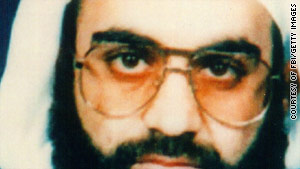
http://i.cdn.turner.com/cnn/2010/POLITICS/03/05/911.trial/story.ksm.fbi.jpg
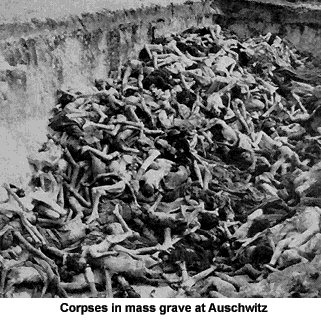
http://www.hollow-hill.com/sabina/images/auschwitz-corpses.jpg


I have posted and re-posted about the injustice and cruelty at Guantanamo Bay, about Fayiz al-Kandari, and his attorney Lt. Col. Barry Wingard.

I have also posted and re-posted about why today's military commissions are inferior to U.S. civilian courts.

Kids often ask why they need to study history in school. After all, it's ancient stuff, stories that have been told, times past that couldn't possibly affect them now.

Wanna bet?

Via NPR:


Sixty years ago, the International Military Tribunal at Nuremberg handed down its first verdict against Nazi war criminals. The Nuremberg trials were structured as a blueprint for something new in international law law... "crimes against humanity" and "crimes against peace". [...]

Commentator Clancy Sigal was a sergeant in the American army of occupation in Germany. [...]

Evidence which included the shrunken heads of tortured prisoners and lampshades made of human skin. [...]

The U.S. War Department was determined that Goering and the other Nazis leaders would receive a fair trial. At Nuremberg, there would be no secret evidence or closed proceedings. The Allies believed that would betray their ideal of restoring democracy in Germany. [...]

Today, in the midst of a national debate on how to treat captured terror suspects, my mind flashes back to Room 600 at Furtherstrasse 22. We gave Goering and the other war criminals a chance not only to defend themselves but in some cases, preach hate and violence.

In a ruined Germany, where so many corpses still lay buried in the rubble, and life seemed so very fragile, we found it in ourselves to give the worst of men due process.


Those unfeeling, brutal Nazi beasts were terrorists... terrorists who killed millions of innocents.

It's time the GOP starts trusting our legal system instead of playing politics, playing with lives. Our democracy is at stake, as well as our international standing.

Why is that so hard to grasp? And why on earth would the Obama administration even consider caving to the GOP... again? Maybe they should all give a listen to this audio.

H/t: Dave_von_Ebers

Friday, February 26, 2010

Kuwait Needs to Speak Up on Guantanamo

By GottaLaff

Lt. Col. Barry Wingard has graciously given me permission to post his latest op-ed in full:

With the Obama administration's January 2010 deadline for closing Guantanamo Bay now in the past, two Kuwaiti detainees remain imprisoned in Cuba where they have been held without trial for more than eight years. While the U.S. government is primarily responsible for the suffering these Kuwaitis have endured, the Government of Kuwait is also responsible for allowing the injustice to continue.

As is universally recognized, Kuwait is a close and faithful ally of the United States. The United States liberated Kuwait following the Iraqi invasion of 1990. More recently, Kuwait provided critical support as a staging area for the U.S. military during the Iraq War.

To be fair, the Emir of Kuwait has sought the return of the Kuwaiti detainees in face-to-face meetings with both President Bush and President Obama. The Emir has also sent a letter to the U.S. government requesting that all Kuwaiti citizens detained at Guantanamo be returned. Other Kuwaiti officials have repeated that request to their counterparts in the U.S. government.

The Government of Kuwait has also fulfilled all of the conditions the U.S. government established for the return of the Kuwaiti detainees. Perhaps most significantly, Kuwait established a state-of-the-art rehabilitation center that provides access to education, medical care, group discussions, and physical exercise to help detainees recover from their long ordeal in Guantanamo.

But while Kuwait has clearly made an effort to secure the return of its citizens, these efforts have not been strong enough. Contrast Kuwait's quiet, diplomatic approach with that of Saudi Arabia, which openly criticized the U.S. government and demanded its citizens back. As a result, more than 100 Saudi detainees were transferred from Guantanamo to Saudi Arabia.

Despite the close ties between the United States and Kuwait, the United States does not appear eager to send Kuwaitis home. For example, on September 17, 2009, a U.S. federal judge ordered the immediate release of Fouad Al Rabiah, an innocent Kuwaiti who was interrogated in "enhanced" ways at the hands of his U.S. captors. Rather than immediately returning him to Kuwait, the U.S. government delayed and stalled Mr. Al Rabiah's transfer, forcing his attorneys to ask that U.S. officials be held in contempt of court. It was not until December 9, 2009, almost three months after the judge's order, that Mr. Al Rabiah was finally released from Guantanamo and returned to Kuwait. Still, even with a Federal judge's opinion that the United States had no authority to detain Mr Al Rabiah, the Kuwaiti government refused to demand his return.

If the United States was reluctant to release a demonstrably innocent man, it most certainly will be in no rush to repatriate my client, Fayiz Al Kandari, whose habeas case is still pending despite Fayiz having spent more than eight years in Guantanamo.

At this critical time, the United States is turning its back on its faithful ally. The United States may be legitimately reluctant to return detainees to countries such as Tunisia or Libya where former prisoners may face further torture or persecution. But there are no such concerns about Kuwait. To the contrary, Kuwait treats its returned detainees humanely and helps reintegrate them into society with a rehabilitation program modeled after the successful Saudi program.

No one likes to tell their friends they are wrong. But there comes a time in every relationship when a little push back is necessary. And the friendship survives. Now is the time for the Government of Kuwait to take a stand. It might be outside its comfort zone, but it is the right thing to do for its two citizens still imprisoned at Guantanamo.

****

Lt. Col. Barry Wingard is the U.S. military attorney for Kuwaiti detainee Fayiz Al Kandari who still awaits his day court more than eight years after he was sold into US custody. The views presented are those of the author and do not necessarily represent the views of the United States Department of Defense or its components.
****

All my previous posts on this subject matter can be found here; That link includes one specific to only Fayiz al-Kandari's story here. Here are audio and video interviews with Lt. Col. Wingard, one by David Shuster, one by Ana Marie Cox, and more. My guest commentary at BuzzFlash is here.

Lt. Col. Barry Wingard is a military attorney who represents Fayiz Al-Kandari in the Military Commission process and in no way represents the opinions of his home state. When not on active duty, Colonel Wingard is a public defender in Pittsburgh, Pennsylvania.

If you are inclined to help rectify these injustices: Twitterers, use the hashtag #FreeFayiz. We have organized a team to get these stories out. If you are interested in helping Fayiz out, e-mail me at The Political Carnival, address in sidebar to the right; or tweet me at @GottaLaff.

If you'd like to see other ways you can take action, go here and scroll down to the end of the article.

Then read Jane Mayer's book The Dark Side. You'll have a much greater understanding of why I post endlessly about this, and why I'm all over the CIA deception issues, too.

More of Fayiz's story here, at Answers.com.
Recent Posts